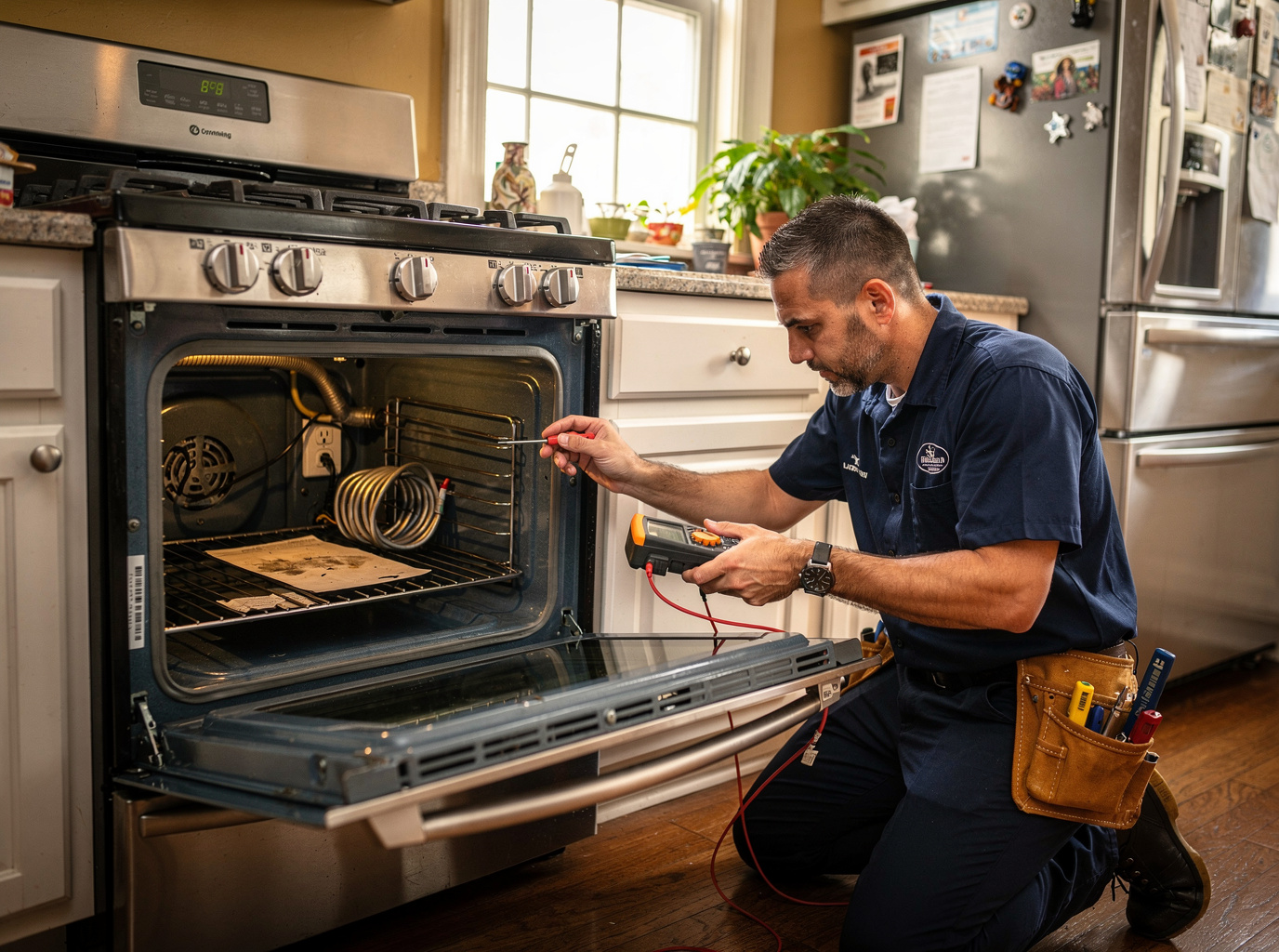
Oven and stove repair in New Orleans requires attention to humidity, older housing stock, and potential moisture issues. Many homes in the French Quarter, Garden District, and Uptown date to the 1950s‑80s with original gas lines and enamel surfaces that can crack when exposed to rapid temperature changes after storms. We inspect burners, igniters, thermal cutoffs, and venting for corrosion from salty air and humidity. Local code requires clearances around burners and proper gas shutoff verification; we follow NEC guidelines and check for mold‑affected insulation under countertops. Avoid running water under a wet stovetop and do not force a stuck burner — these increase repair time and parts cost.
Seasonal Considerations
Humid subtropical climate with frequent hurricanes means moisture intrusion after storms. Older homes often have plaster walls and concrete slabs that retain humidity, which can affect oven calibration and cause mildew in cabinet interiors. We recommend allowing the oven to dry completely before re‑ignition and checking for water damage behind the unit. In hurricane prep season (June‑October), schedule repairs before evacuations to avoid hidden moisture issues post‑storm.
Technician insight
In New Orleans, the thing that catches most people out with oven and stove repair is assuming a clicking igniter means the burner will light. Igniters can click due to moisture or a stuck safety switch, especially in older French Quarter and Garden District homes after hurricane season. Homeowners often run water under the stovetop while waiting, which introduces moisture that delays ignition and can corrode contacts. We always check the thermal cutoff first and let the unit air‑dry before attempting to light.
Oven won’t heat after storm
Customer in Mid‑City reports oven not heating after rainfall and power restoration. We find the oven element is cracked (likely from thermal shock) and the thermal cutoff tripped due to residual moisture. We replace the element, reset the cutoff, clean the vent hood, and re‑calibrate. Oven heats correctly within an hour; customer confirms no repeat issue after drying the kitchen floor.
Oven and Stove Repair Services We Offer
✓Oven Element Replacement
Replace heating elements that fail due to age, humidity exposure, or thermal cycling. Typical in homes built before 2000 where elements are glass‑ceramic and prone to micro‑cracks.
✓Igniter Repair or Swap
Fix or replace electronic igniters that click but don’t spark, common in gas ranges in Mid‑City and Treme where frequent power fluctuations occur.
✓Gas Valve and Regulator Inspection
Inspect gas control valves and regulators for leaks and proper pressure, especially in older neighborhoods with historic gas lines.
✓Range Top Surface Repair
Repair or replace damaged glass‑ceramic or enamel cooktop surfaces that crack from thermal shock after storms.
✓Vent Hood and Filter Cleaning
Clean grease filters and vent hoods that clog quickly in humid kitchens; necessary for proper airflow and safety.
✓Thermal Cutoff Reset and Testing
Locate, reset, and test thermal overload switches that trip due to overheating in oven racks left too long after power restoration.
Oven and Stove Repair Cost in New Orleans, LA
| Service | Typical Range | What Affects It |
|---|---|---|
| Oven Element Replacement | $180–$350 | Price rises if element is glass‑ceramic (common in pre‑2000 homes) and requires removal of back panel. |
| Igniter Repair or Swap | $120–$250 | Higher if electronic board needs replacement; older gas ranges often have simple igniters. |
| Gas Valve and Regulator Inspection | $90–$160 | Includes pressure test; additional cost if valve is corroded and needs full replacement. |
| Range Top Surface Repair (crack repair) | $150–$400 | Full replacement of glass‑ceramic top costs more; repair depends on crack size and age of surface. |
| Vent Hood & Filter Cleaning | Free | Standard cleaning included; deep grease removal may incur $30 if hood is heavily clogged. |
Ranges are typical for New Orleans, LA and confirmed with an exact written quote before any work starts.
How it works
- 1
Diagnostic Inspection
We arrive in uniform, verify the model and age, and perform a safe power‑off inspection. We check for error codes, test igniters, measure element resistance, and inspect gas line pressure. In humid homes we also look for moisture under the unit and test clearances per code.
- 2
Explain Findings & Quote
We describe the exact issue in plain language, show any corrosion or cracked elements, and provide a written estimate that includes parts, labor, and any needed vent cleaning. No hidden fees; we confirm price before starting.
- 3
Repair or Replace
We replace faulty parts using OEM or high‑quality aftermarket parts approved for residential use. We re‑calibrate the oven thermostat, test all burners/elements, and clean the vent hood. We verify gas shutoff operation and leave the area tidy.
Pricing
Upfront, written estimate provided after inspection; no call‑out fee for emergency service within city limits.