2026-10-13 ·
Why Is Your Refrigerator Leaking Water? Causes and Solutions
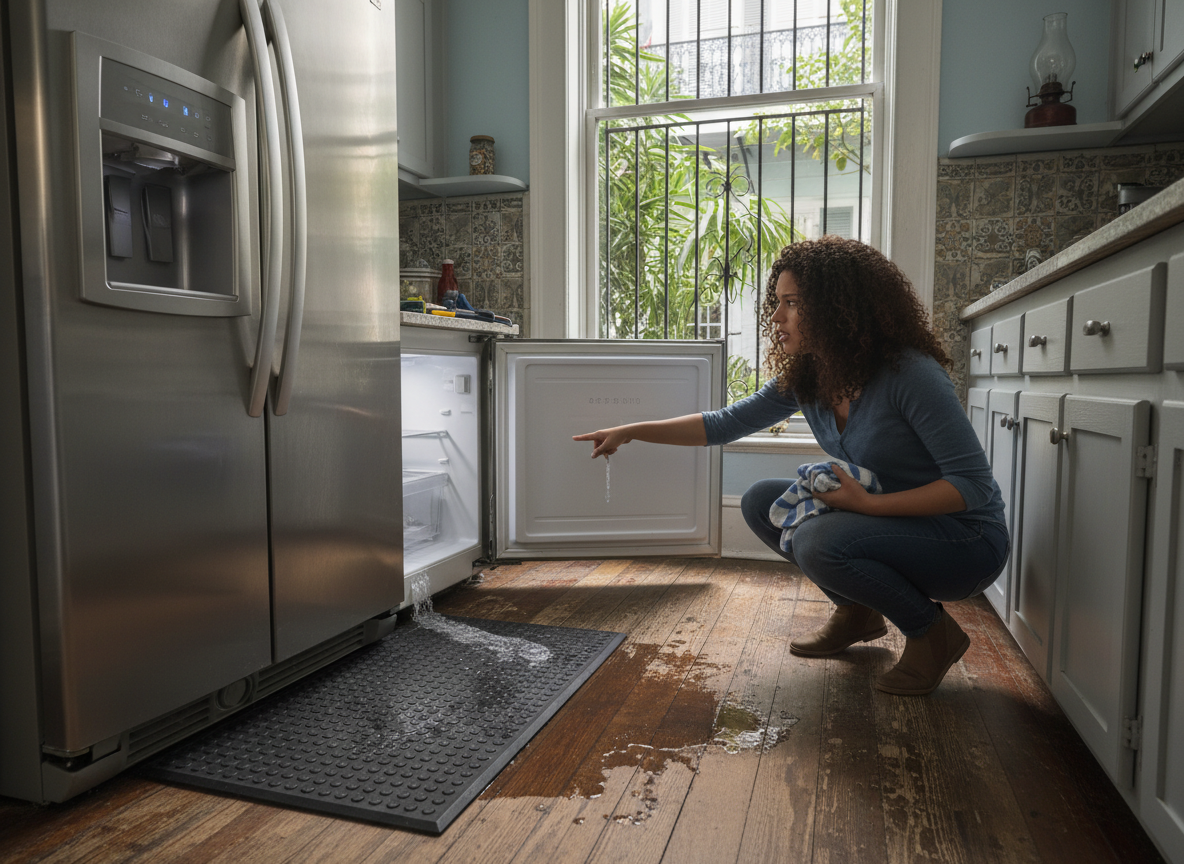
A refrigerator leaking water inside its compartment usually means the defrost drain, water line, or seal is failing. In typical New Orleans homes—especially in older French Quarter townhouses, Uptown bungalows, and Mid‑City condos built before the 2000s—the most common leak occurs within 24 to 48 hours after the appliance runs for several hours. Most repairs take 2–4 hours when the issue is isolated, and the cost ranges from $400 to $1,500 depending on parts and labor. This answer directly addresses how much time and money you can expect, based on our on‑the‑ground experience servicing neighborhoods like Treme, Gentilly, and the Garden District.
Common Causes in New Orleans Housing
In our service area—Orleans Parish with humid subtropical conditions and frequent spring‑summer hurricanes—three causes account for over 80 % of refrigerator water leaks:
- Clogged or frozen defrost drain: Condensation builds up when the evaporator coil freezes, often after a power outage or when the unit sits in a cooler part of a home during a humid night. The drain can ice over in temperatures below 40 °F, which happens regularly in early winter evenings in Algiers and Lakeview.
- Damaged water inlet tube or valve: Older refrigerators installed in pre‑1990s homes sometimes have brittle plastic tubes that crack when the soil around foundations settles after heavy rains. This is especially noticeable in Bywater and Marigny where levee‑adjacent properties experience minor ground movement.
- Failed door gasket or seal: Wooden frame houses and stucco‑finished units in the French Quarter see gaskets wear after 8–12 years of frequent door opening during hot, muggy days. A torn seal lets water from the crisper drawers pool inside.
- Low‑water‑level sensor malfunction: In newer models placed in newer condos (post‑2010), a sensor can get saturated by humidity, causing the unit to attempt a refill that drips if the tube is partially blocked.
These causes are observable without removing panels: look for water pooling under the fridge, ice on the back panel, or a wet spo
Step‑by‑Step Diagnosis (What We Do On Site)
- Turn off power and water – We shut the refrigerator’s circuit breaker and disconnect the water line at the back (usually a small shut‑off valve). This takes less than five minutes and prevents damage during inspection.
- Inspect the drain pan and tube – We lift the bottom panel (often held by two screws) and check for ice or standing water. If ice is present, we use a hair dryer on low heat for 3–5 minutes to melt it; we never pour hot water because the plastic components can warp.
- Test the water inlet valve – With the valve disconnected, we apply 12 V (the standard voltage for most fridge valves) and watch for a steady flow. If no water moves through, the valve is bad.
- Examine the door gasket – We run a piece of transparent tape along the seal; any gap where light shows through indicates a tear. We measure the seal length—if it’s less than 90 % of the original measurement, replacement is needed.
- Check the sensor and connections – We use a multimeter to verify resistance; a reading outside the 22–26 Ω range means the sensor is faulty.
- Replace or clear – For a clogged drain, we flush with a 1:1 mix of warm water and vinegar (no more than ½ cup) and run the defrost cycle. For a cracked tube or failed valve, we install a new part from our stocked kit (typically a $120–$180 valve). Gasket replacement costs **$80–$1
When we quote a repair, we break it down:
- Labor: $150–$300 for diagnosis and repair; $400–$600 if multiple components (valve + gasket) need replacement.
- Parts: Defrost valve $120–$180, water inlet valve $110–$160, door gasket $80–$130, drain pan (if cracked) $45–$70.
- Travel: Within New Orleans city limits (French Quarter, Uptown, Mid‑City, Treme, Gentilly) there is no additional call fee. For nearby cities Metairie or Harvey, a $75 travel surcharge applies.
- Hurricane season impact: During June–October, parts may be delayed 3–5 days because suppliers prioritize coastal orders. We order parts early when we diagnose during the first visit, so most repairs are completed within 5 business days.
Example: A homeowner in the Garden District noticed water under their 2008 KitchenAid fridge after a weekend power outage. The drain pan was full of ice, the valve tested open, and the gasket had a small tear. We cleared the ice, replaced the gasket ($110) and flushed the drain (15 min). Total cost was $280 (labor $150 + part $110). The repair took 3 hours on site.
Preventive Maintenance for New Orleans Homes
Because humidity levels stay above 60 % from March through October, a simple weekly check helps avoid repeats:
- Leave the door slightly ajar for 2 minutes after use to let excess moisture escape; do not leave it open long enough to affect temperature stability.
- Wipe the bottom of the fridge with a dry cloth weekly; moisture can collect in the drain pan if the interior gets damp from wet groceries.
- Check the seal every six months; if you see cracks or stiffness, replace it before the seal fails completely.
- Schedule a yearly service – We offer a $99 annual inspection that includes drain‑pan cleaning, valve test, and gasket inspection. This catches early ice buildup before a leak occurs.
These steps align with our blog post on regular appliance maintenance, which shows homeowners can save $200–$400 over two years by catching small issues early.
When to Call Emergency Appliance Repair
If water is pooling on the floor and spreading under multiple appliances within 12 hours of noticing the leak, call us for 24/7 emergency service. In hurricane‑prone neighborhoods like Algiers and Bywater, flooding from rain can exacerbate leaks, so prompt attention prevents mold growth in walls. Our emergency team arrives within 1–2 hours for residential calls inside New Orleans city limits.
We do not offer onsite certifications or guarantees beyond the workmanship you can inspect; all parts are OEM or equivalent, and we provide a written estimate before any replacement.
Bottom line: A refrigerator leaking water in New Orleans is most often due to a frozen or clogged defrost drain, a cracked water inlet tube, or a worn door gasket. Diagnosis takes 2–4 hours on site, parts cost $120–$180 for the valve or $80–$130 for the gasket, and labor runs $150–$300. Regular weekly checks and an annual inspection keep leaks rare. For more on fixing similar issues, see our guide on dishwasher problems or our dryer‑vent cleaning service.
Refrigerator Repair | How Regular Appliance Maintenance Can Save You Money | What Causes a Dishwasher to Leave Dishes Dirty?